a signature, a rain gutter, a charleston
the history of fringe in fashion, from mesopotamian clay and plains leatherwork to flappers, 1970 and this autumn’s restraint.
the short answer
fringe began as identity: in mesopotamia, between about 3000 and 300 bce, men pressed their garment’s fringe into clay contracts instead of a seal1. on the plains it shed rain from leather; around 1700 it trimmed silver-gilt gloves2; in the 1920s it swung on flapper dresses; around 1970 it was counterculture. this autumn it is one moving detail.
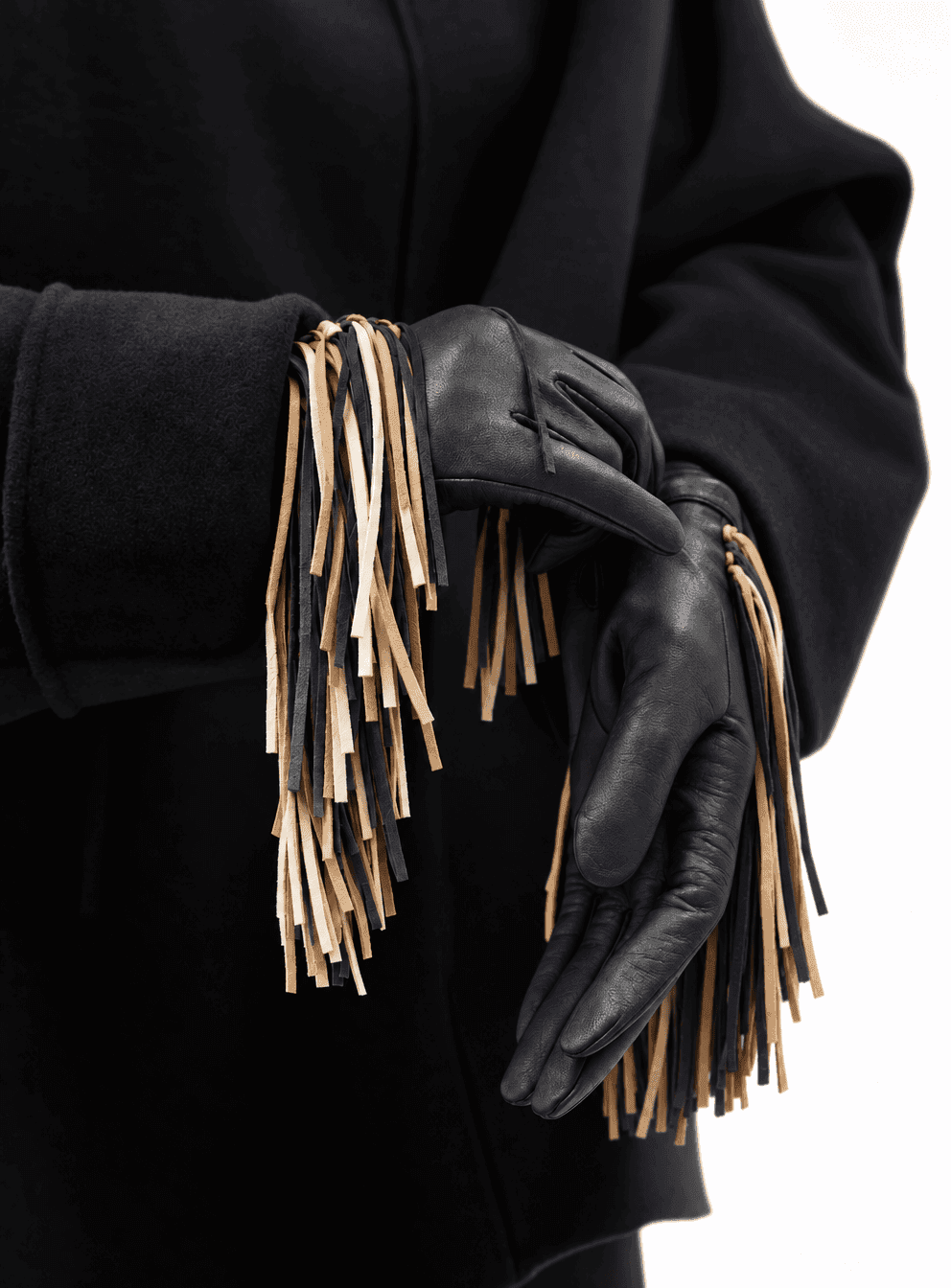
somewhere in mesopotamia, several thousand years ago, a man sealing a contract pressed the edge of his garment into wet clay. instead of a carved seal he used the knotted fringe of his own hem, distinctive enough to stand for his name. it is one of the earliest and strangest facts about the trim, and a useful place to begin, because it shows that fringe has never been merely decorative. it has always said something about the person wearing it.
the history of fringe in fashion is a story of that meaning changing hands. fringe has been a signature, a rain gutter, a mark of rank at the wrist, the motion of a dance floor, a political statement and, this autumn, a lesson in restraint. each revival has kept the movement and changed the message.
a signature in clay
according to the encyclopedia.com entry on fringe1, from around 3000 to 300 bce fringe was “a popular and important decorative adornment” for the clothing of both men and women in mesopotamia, where skirts and shawls were edged in dyed and knotted strands. the same entry records the contracts: “instead of using a seal to impress their mark on a clay contract, men would use their unique fringe.” fringe here is identity, worn on the body and lent to a document.
leather and weather
on the north american plains, fringe had a practical logic as well as a decorative one. the same source notes that the fringe on native american leather and buckskin garments “served as a type of gutter that repelled rainwater from the wearer”, leading water off along the strands and away from the seams. it is the best argument ever made for fringed leather, and it explains something you can still feel today: leather cut into fine strands has weight, falls cleanly and swings back into place.
fringe later became, in the encyclopedia’s words, “decoration on the leather clothes of cowboys in the american west”, and that is the version most people still picture. it is worth remembering that the cowboy borrowed it.
silver at the wrist
in europe, fringe found its way to the hand. the v&a holds a pair of british gloves made between 1680 and 17002 in kidskin embroidered with silver and silver-gilt thread, lined with silk taffeta and “trimmed with heavy fringe of silver-gilt thread, tassels and coils of purl”. gloves like these had little to do with warmth. they were made to be seen, and their fringe would have caught candlelight every time the hand moved. the idea that a fringed glove turns gesture into display is more than three centuries old.
the 1920s dance floor
fringe became a fashion embellishment in its own right, the encyclopedia says, “in the 1920s as part of the flapper look”. as hemlines rose towards the knee, strands of silk and beads lengthened the line of a dress and set it moving with every step of a charleston. the appeal was kinetic and new: a dress that looked different in motion than at rest, made for electric light and fast music.
1969 and 1970
the next revival came out of the counterculture. encyclopedia.com links the fashion for native american fringe to the hippie movement of the late 1960s and credits the 1969 film easy rider, with its fringed suede jacket, for helping to popularise the look “as a fashion statement more than a political one”. in fashion proper, giorgio di sant’angelo’s fall 1970 collection drew on native american ceremonial dress and won a coty american fashion critics’ award.
the same years produced the backlash. the folk singer buffy sainte-marie, the entry notes, deemed such clothing insensitive to native americans of the time, many of whom lived in poverty. by the mid-1970s, fringe had largely gone out of style. that tension belongs in the story. fringe has often been borrowed, and the question of from whom has never quite gone away.
a timeline
| when | where fringe appeared | what it meant |
|---|---|---|
| c. 3000 to 300 bce | mesopotamian skirts and shawls | identity; a signature on a contract |
| long tradition | plains leather and buckskin | function, shedding rain; craft |
| 1680 to 1700 | silver-gilt fringe on british kidskin gloves | rank, gift-giving, gesture |
| nineteenth century | cowboy leatherwear in the american west | the frontier, ruggedness |
| 1920s | flapper dresses | movement, modernity, nightlife |
| 1969 to 1970 | suede jackets; sant’angelo’s fall 1970 collection | counterculture, and controversy |
| autumn/winter 2026 | dresses, skirts, accessories, gloves | control; one moving detail |
the history of fringe in fashion, now
this season the trim is everywhere, but its accent has changed. coveteur’s autumn report3 found fringe “all over fall/winter 2026”, in a range of moods: placed on a single hip and shoulder at altuzarra, with 1920s-style embellishment at diotima, kept short and subtle at proenza schouler, and running from top to bottom at akris. at bottega veneta, louise trotter’s second collection4 overflowed with fur, pile, shearling and fringe. the zoe report described5 the shredded hems at stella mccartney, rabanne and lanvin as “paper-shredder skirts”.
what links these is placement. earlier eras covered garments in fringe. the modern instinct is to put it in one place, on a hip, a hem or a hand, and let everything around it stay still. fringe looks most sophisticated when it is the only thing that moves.
it is the reason fringe at the wrist feels so right this winter. the glove brings the seventeenth-century idea, that a hand in motion is worth looking at, and the leather brings the plains logic of weight and swing. wutong’s first design, a black fringed leather glove, sits squarely in that line: one moving detail at the end of a plain sleeve.
wearing fringe with its history in mind
choose fringe in dark or deep-coloured leather rather than tan suede if you want it to read as evening rather than western. keep to one fringed piece per outfit. wear it with tailoring, knitwear and wool, unless the western reference is exactly what you want. and be thoughtful about borrowing: avoid pieces that copy sacred or ceremonial dress, which is the line the 1970 controversy drew.
wutong’s black fringed leather gloves, alongside its high-end leather gloves in colour, are one small modern chapter in a very long story. you can see the fringed pairs, including one knotted in black, tan and cream, in the fringe gloves collection.
quick answers
- when was fringe most fashionable?
- its two great peaks were the 1920s and the late 1960s into the early 1970s. it has returned in cycles since, and autumn/winter 2026 brought it back across a remarkable number of runways.
- why does fringe suit leather so well?
- leather can be cut into fine strands that keep their shape and carry weight, so they fall cleanly and swing. on the plains, fringed leather also helped water run off garments.
- is fringe always western?
- no. its history runs through mesopotamia, seventeenth-century european gloves and 1920s eveningwear as much as the american west. styling decides which story it tells.
the gloves in this piece
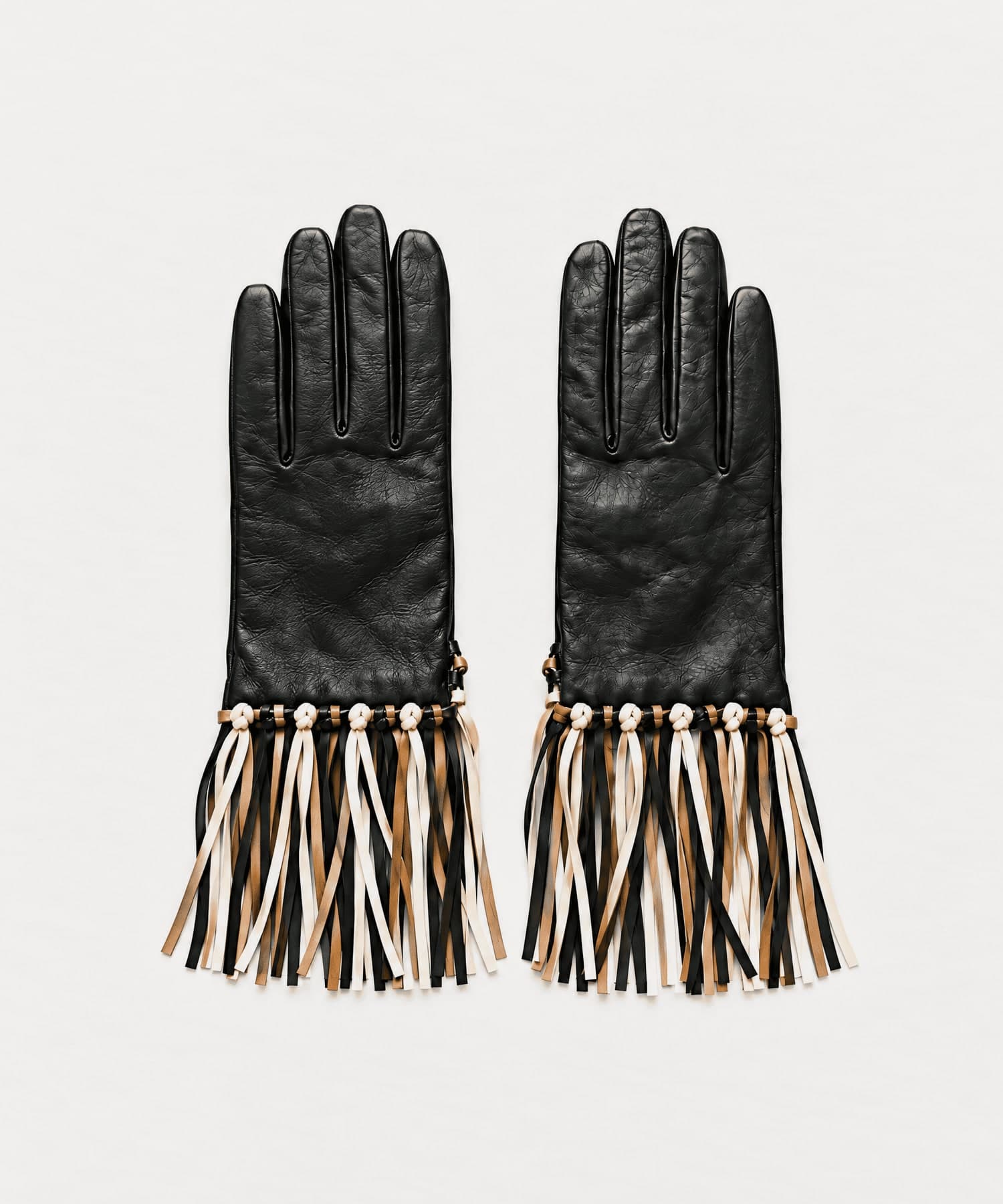
008 knotted fringe gloves£120
black nappa leather with a three-colour fringe
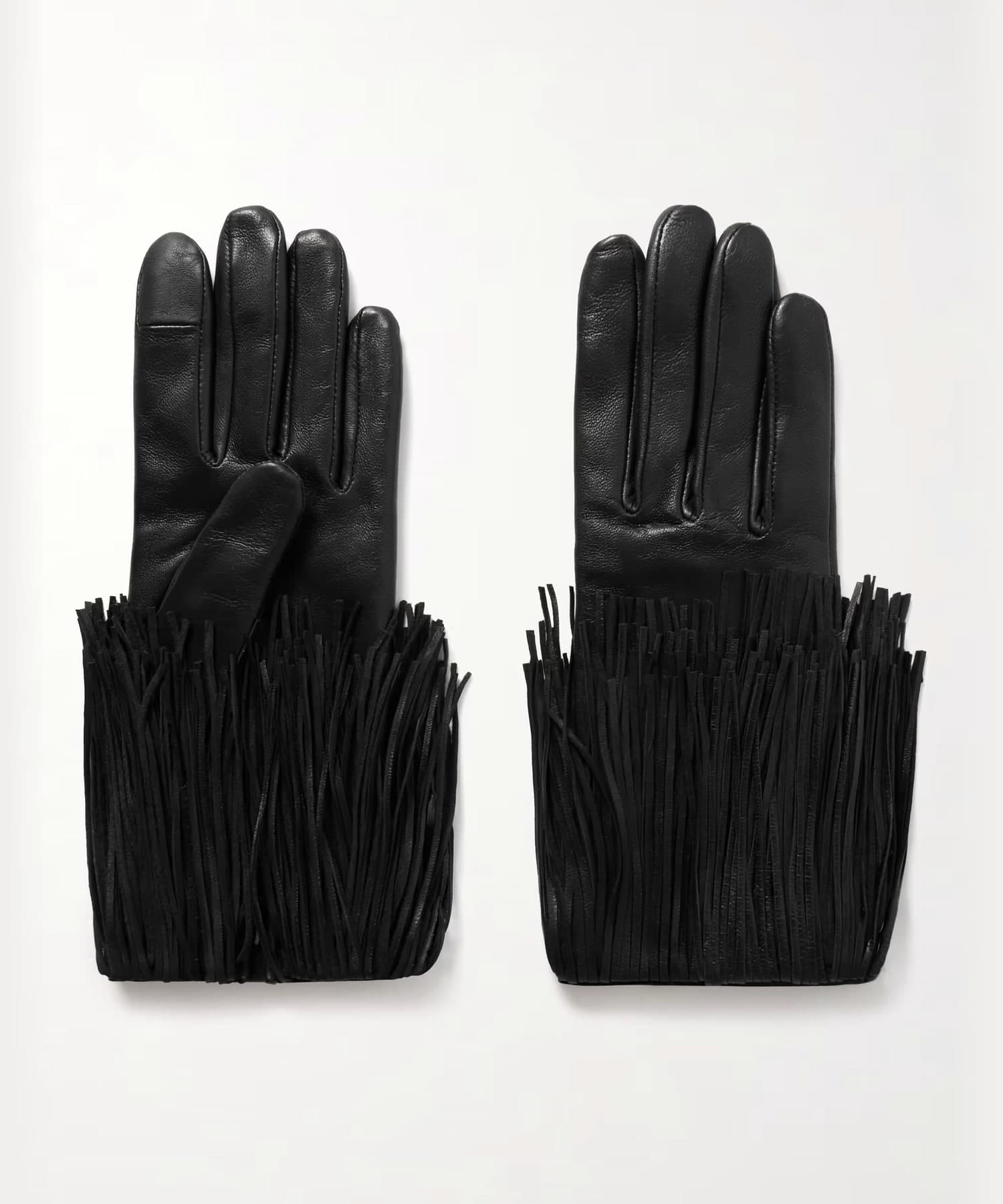
001 fringe gloves£120
sheepskin nappa leather with fringe details
every style is size 7 and ships tracked from the uk, free to uk addresses, with returns accepted within 14 days of delivery. delivery & returns
keep reading
sources
- encyclopedia.com, Fringe | Encyclopedia.com
- V&A, Pair of Gloves | Unknown
- Coveteur, It's A Fringe-Forward Fall, 12 october 2026
- Coveteur, The Fall/Winter 2026 Runway Trend Report, 20 march 2026
- The Zoe Report, Paris Fashion Week Just Made Getting Dressed A Lot More Fun, 11 march 2026